A homeowner's guide for Lakewood, Colorado
Lakewood water damage, measured before anything gets torn out
Water travels under floors and behind walls before you notice it. This guide shows how an assessment tracks it down in a Lakewood ranch, split-level or townhome, what can dry in place, and what to ask before anyone starts cutting.
Before you hire anyone, ask three things: who answers the phone after hours, how long it really takes to reach Lakewood, and whether the technicians hold IICRC certification.
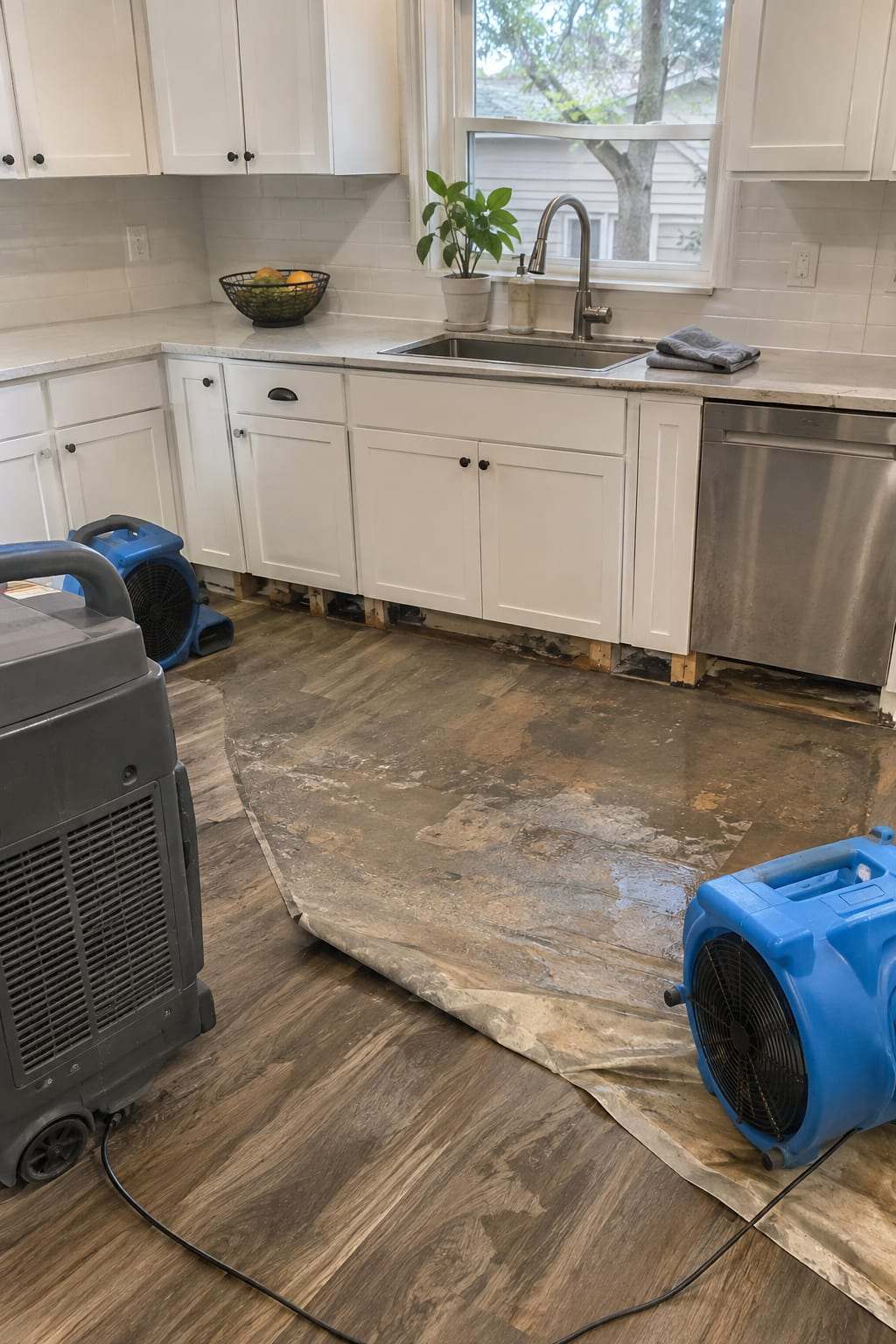
A hallway floor drying under plastic, with the dehumidifier tented in.
The first hour
Four things to do before anyone arrives. They protect the house and your claim, and none of them takes a tool.
- Shut off the water. If it has reached outlets or fixtures, cut power to those rooms at the panel.
- Write down when the leak started or when you found it. Your insurer will ask.
- Photograph everything wet and keep the part that failed, whether a hose, valve or supply line.
- Call your insurer, then a restoration company you have checked out for emergency drying or an assessment.
If anyone is hurt, you smell gas, or water is near the electrical panel, leave the area and call 911.
Mitigation, defined
The stain you can see is the small part of the leak
Mitigation is the work that stops a water loss from getting worse: shutting off the source, pulling out standing water, removing what can't be saved and drying the structure before mold or rot starts. Restoration comes after and rebuilds what was damaged. Your insurer usually expects mitigation to begin right away.
Good mitigation starts with a careful assessment. Water wicks under flooring, behind cabinets and into wall cavities, so the mark on the surface understates the problem. A good assessor takes moisture readings across the whole area, explains why each material should stay or go, and writes the plan down before work begins.
What a proper assessment checks
- How far water traveled under flooring and into the next room, found with moisture meters and a thermal camera.
- Whether the water was clean, gray or contaminated, since that decides what can be saved.
- Which materials dry well in place, like framing and most hard surfaces, and which rarely do, like carpet pad, soaked insulation and swollen particleboard.
- Signs of older damage or existing mold that change the scope.
- Materials that need an asbestos test before anyone disturbs them, such as older vinyl flooring or textured ceilings.
How an assessor sketches a wet hallway
Diagram of how readings get marked. Not a reading from any house.
The damp square on the right sits in the next room, behind a wall nobody touched. Readings find it. Eyes don't.
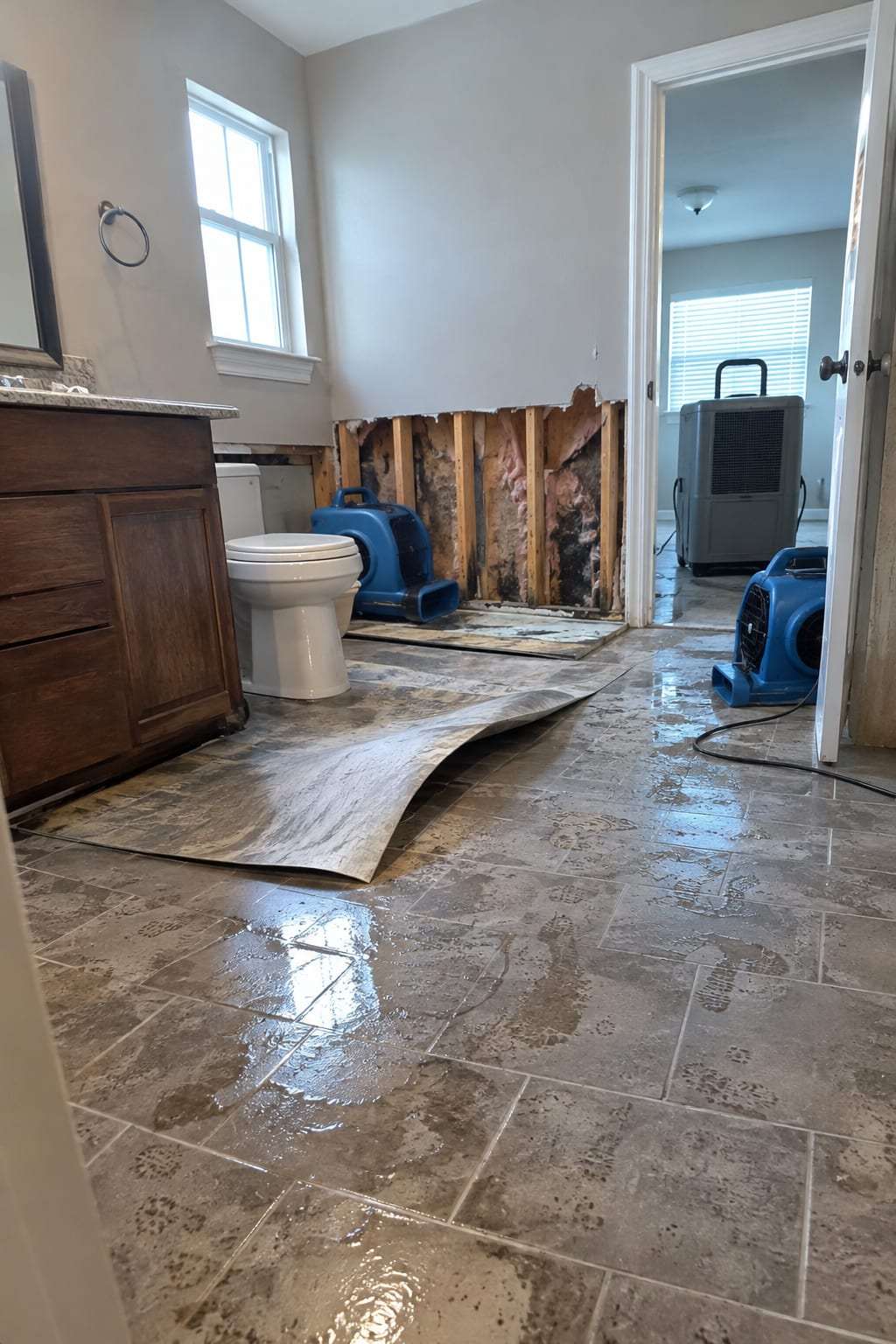
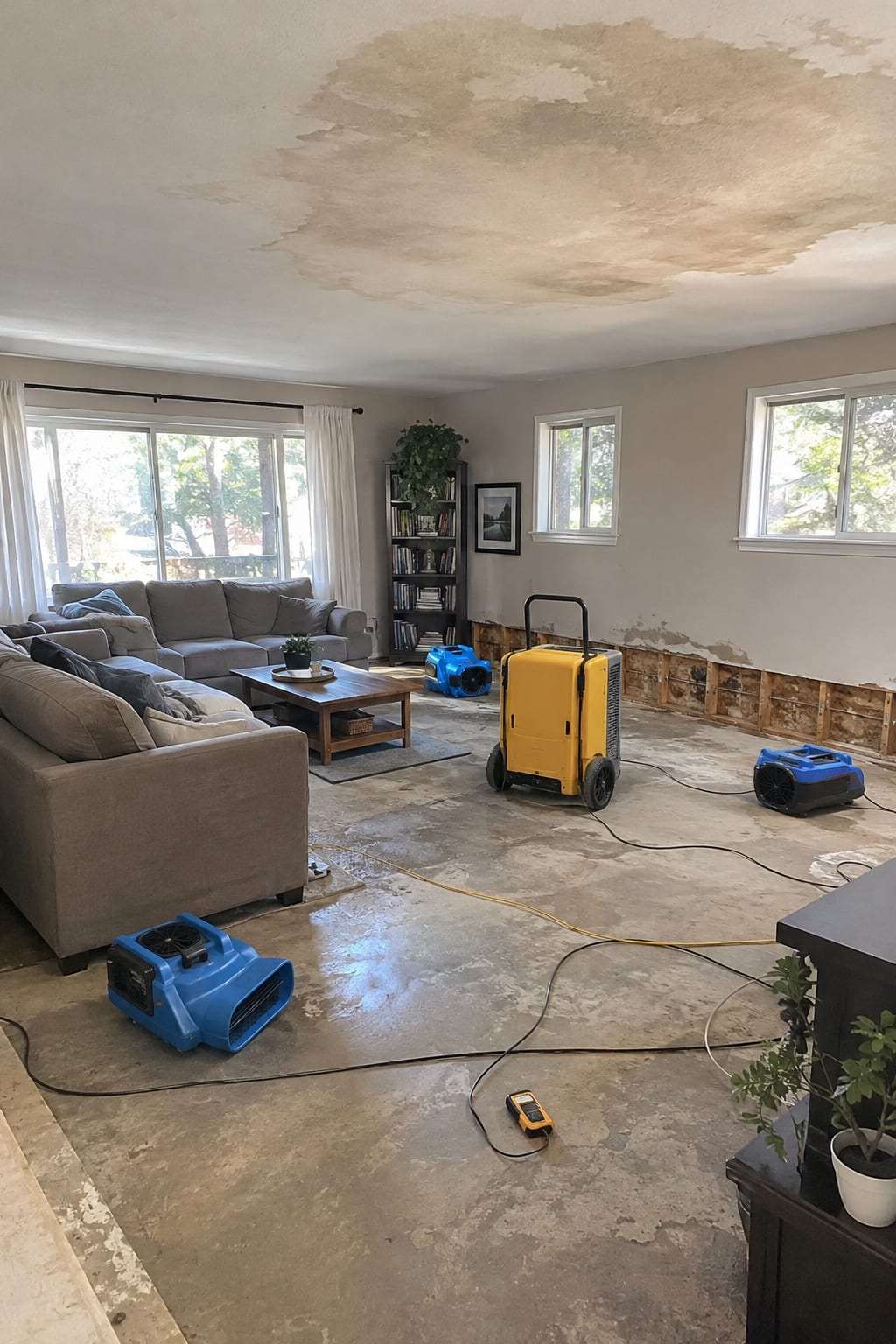
A ceiling tells you late. By the time texture peels like this, water has sat on the drywall above for a while.
The job is done when the framing reads the same as a dry room down the hall.
A carpet that feels dry proves nothing. Ask for the readings in the framing and subfloor, written down next to readings from an unaffected room.
Structural drying
How a drying job should run
Each step leaves a paper trail, so you and your adjuster can see what was done and why.
-
Inspection and moisture mapping
Find the wet materials and record a starting reading at each test point across the affected area.
-
Water removal
Extract standing water and the water soaked into carpet and pad, which shortens the drying time.
-
Selective removal
Take out only what can't be dried or what contaminated water reached.
-
Drying and monitoring
Set air movers and dehumidifiers, then take readings each day until wet materials match dry areas of the house.
-
Repair scope
Write up the repairs in detail, whether the same company does them or you hire someone else.
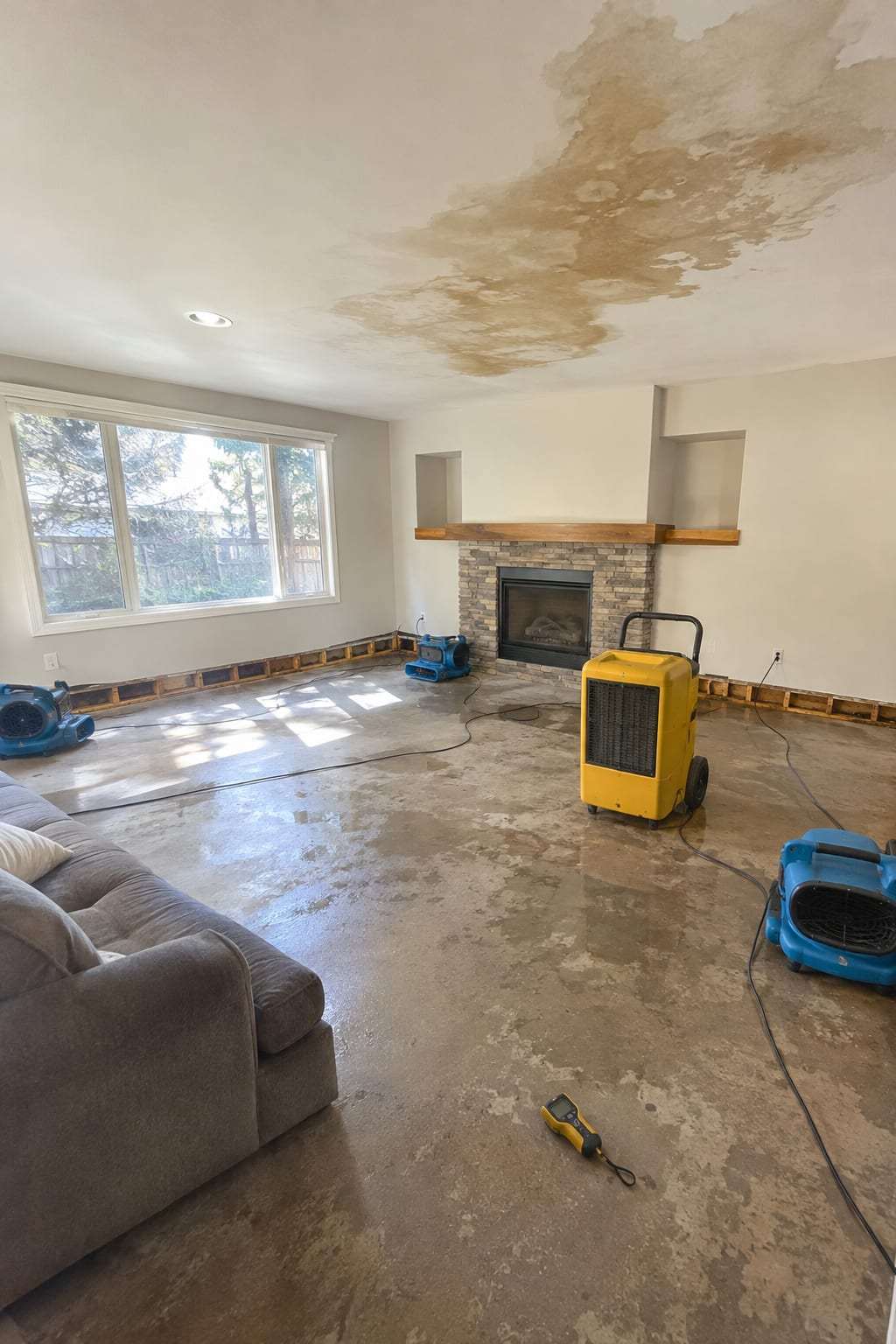
Air movers go where the readings point. A technician sets fans along a kitchen wall after a leak.
Drying is finished when readings in the framing and subfloor match an unaffected part of the house, and those readings are on paper.
Wet drywall
Can the wall dry, or does it have to come out?
Tearing out drywall that could have dried costs you a repair you didn't need. Leaving wet drywall that can't dry invites mold. The answer depends on the water, how long it sat and what is behind the wall, and a moisture meter should make the call.
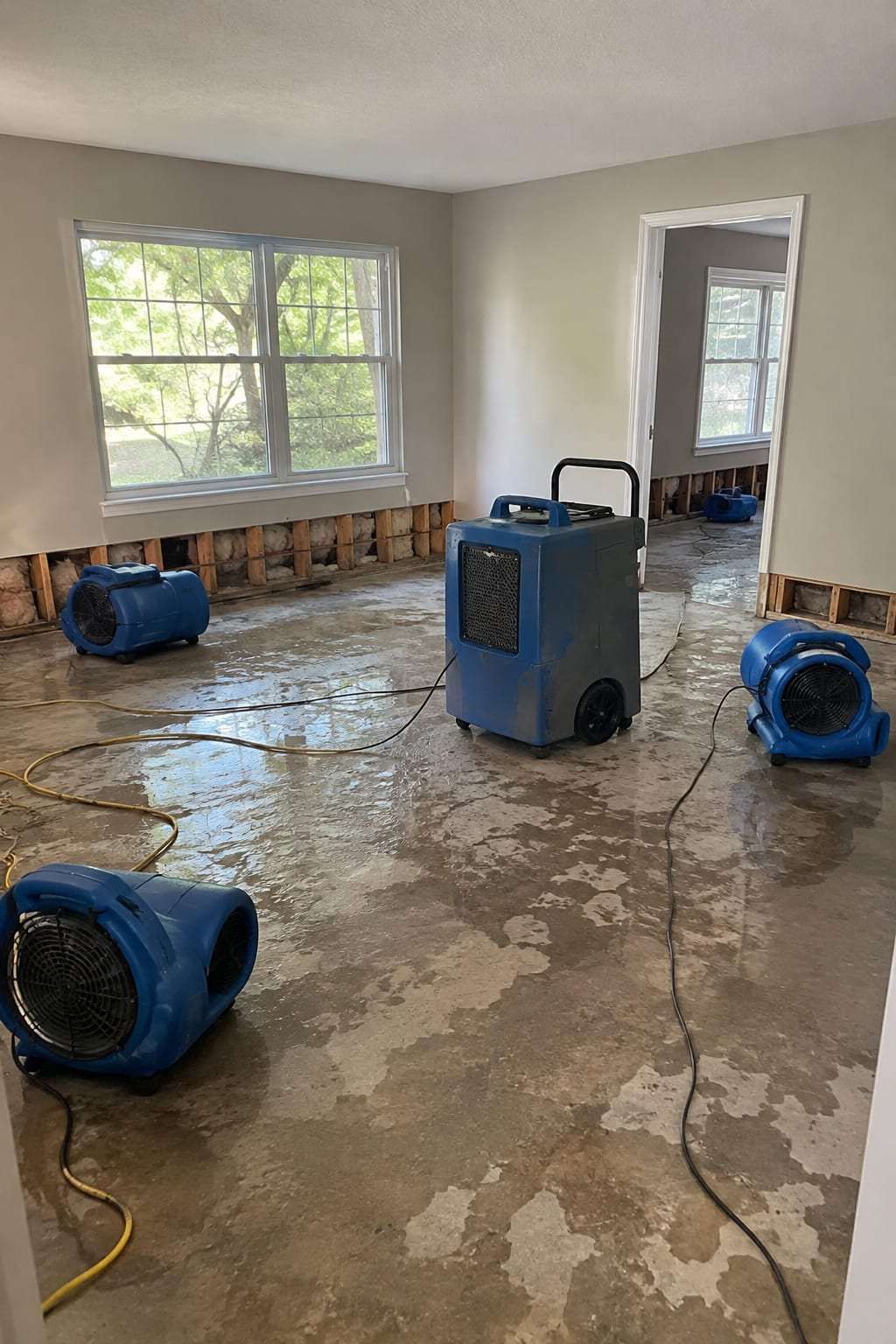
A flood cut, done right. The lower strip of drywall comes out in a straight line so the cavity can dry.
Dry it in place
Usually works when
- Clean water came from a supply line or appliance
- Drying started within a day or so
- The drywall is firm and the paint isn't bubbling
- The insulation behind it isn't soaked
Cut it out
Usually needed when
- Sewage, groundwater or other contaminated water reached it
- The drywall is soft, crumbling or sagging
- Insulation in the cavity is wet
- You can already see growth or smell must
Lath-and-plaster walls in Lakewood's older houses behave differently from drywall and often dry in place. For the full decision, read drying drywall in place or cutting it.
Basements and subfloors
Under the floor is where water hides longest
Flooring pulled back to the subfloor on a stair landing, so the wood underneath can be read and dried.
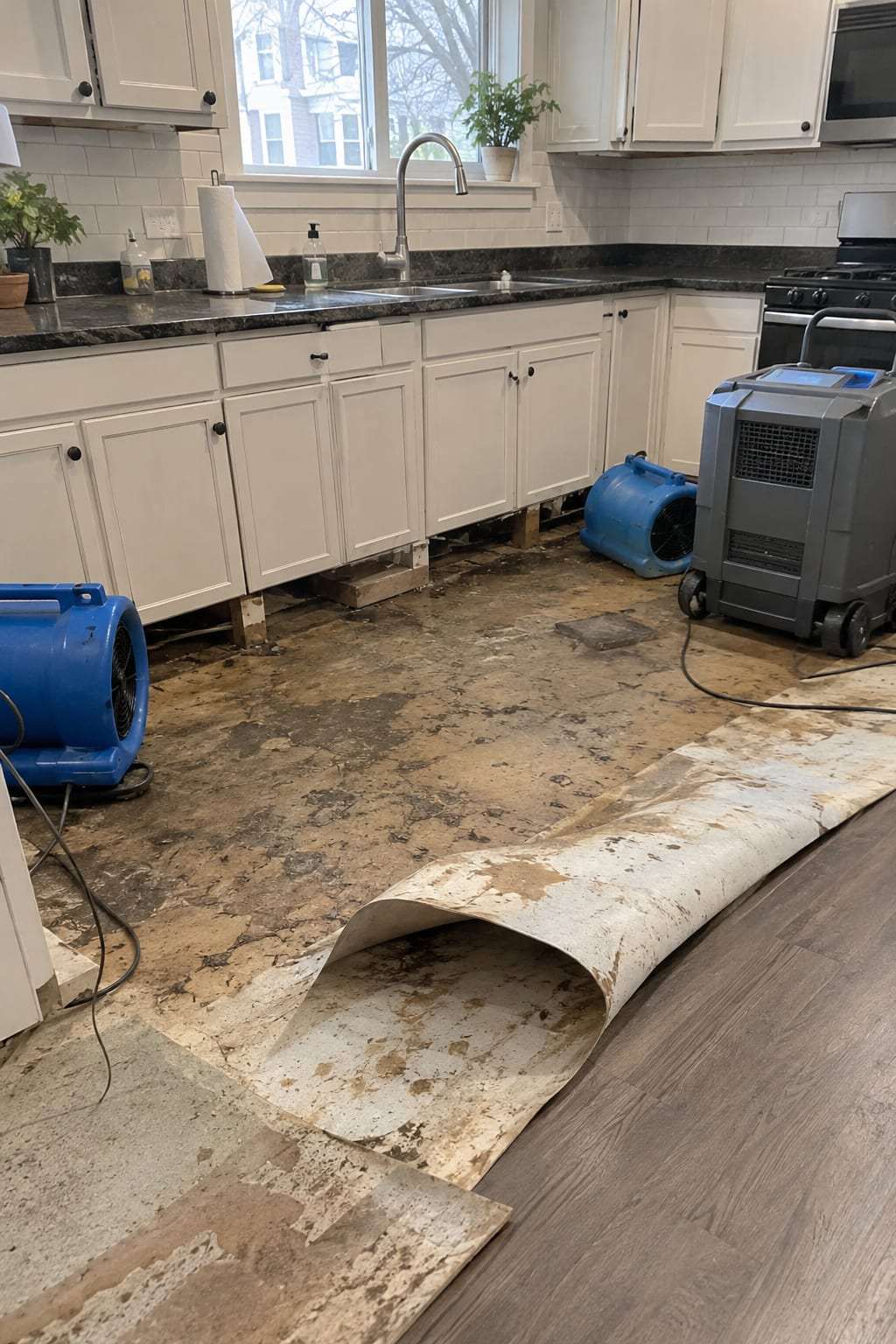
The dark patch is the leak's real footprint. The finished floor above it looked fine.
Extraction comes before fans
Ranch homes and split-levels put living space at or below grade, where water collects. Carpet pad holds water like a sponge, and fans can't pull it out of a soaked pad and subfloor. Truck-mounted or portable extractors remove the standing and trapped water first. Then the drying equipment goes in.
Lakewood specifics
Lakewood houses and the leaks they tend to have
Lakewood is the largest city in Jefferson County, and most of it was built in the decades after World War II. Expect ranch homes and split-levels from the 1950s through the 1970s, newer construction mixed in, and denser redevelopment around Belmar. Many of these houses have had several owners and several rounds of plumbing and basement updates.
Age brings its own problems. Galvanized steel supply lines rust from the inside, original water heaters and shutoff valves wear out, and some materials from that era, including vinyl flooring, mastic and textured ceilings, may contain asbestos and need testing before demolition.
Guides for wet walls, floors and basements
Plain-language guides and checklists written for Lakewood's ranches, split-levels and townhomes.
- Guides
Each guide takes one problem that shows up in Lakewood houses, from rusting galvanized lines to leaking rooftop coolers.
- Checklists
Use these, don't just read them.
- Service Area
House age, slope, building type and who issues permits all shape how a water loss plays out.
Does insurance treat mitigation and repairs separately?
Often, yes. Many insurers handle emergency drying and repairs as separate parts of a claim, sometimes with separate estimates. Your adjuster can explain how your carrier does it. Ask the restoration company for documentation that covers both.
How do technicians check for moisture inside a wall?
They use pin and pinless moisture meters on drywall and framing, and a thermal camera to spot cooler, damp areas. Each reading is compared with a dry area of the same material in your house.
Can water-damaged drywall be saved?
Often, if clean water wet it and drying started quickly. Drywall that is soft, crumbling or contaminated gets replaced. Meter readings and the wall's condition should drive the decision.
Should old materials be tested for asbestos before removal?
Yes, if the house was built before the 1980s and the work would disturb suspect materials such as older vinyl flooring, mastic or textured ceilings. Certified abatement personnel must handle anything that tests positive.
Why is a slow leak handled differently from a sudden one?
A slow leak often comes with rot, mold or deterioration that a sudden burst doesn't, and many policies treat gradual leaks differently. The assessment should document the condition either way.
What is a drying goal?
It's the moisture level a wet material needs to return to, usually set by reading the same material in a dry part of your house. Drying continues until the wet areas reach it.
What is a flood cut?
A flood cut is a straight cut along a wall, a little above the highest wet line, that removes only the damaged lower strip of drywall. It opens the cavity so it can dry, and the repair becomes a clean patch instead of a new wall.
Water on the floor right now?
Shut off the water, photograph the damage and call your insurer. Then pick a restoration company you have checked, and make sure the documentation starts on the first visit. If anyone is in danger, call 911.
What a first call should cover
A good restoration company asks where the water came from, when it started, which rooms are affected and how old the house is. If water is still moving, ask how soon someone can realistically arrive. If you found old damage, ask for an assessment visit that maps the moisture and ends with a written plan.
Describe the water damage
This form is not connected. This website is a draft preview: no business has been confirmed to receive requests, so the fields below are switched off and nothing can be sent. In an emergency, call 911.