The map is the evidence
After a leak, the damage you can see is a poor guide to the real extent. Water wicks up drywall, spreads under vinyl and laminate, and soaks into the bottom plate of walls on the far side of a room. A moisture map makes that hidden spread visible: a floor plan with a reading written at each point tested, usually color-coded or circled to show wet, damp and dry.
Almost every later decision rests on the map. It sets the boundary of what needs drying, backs up the choice to remove or keep each material, shows your insurer the scope of the loss and gives you a baseline to compare against each day. A plan with no map is a guess.
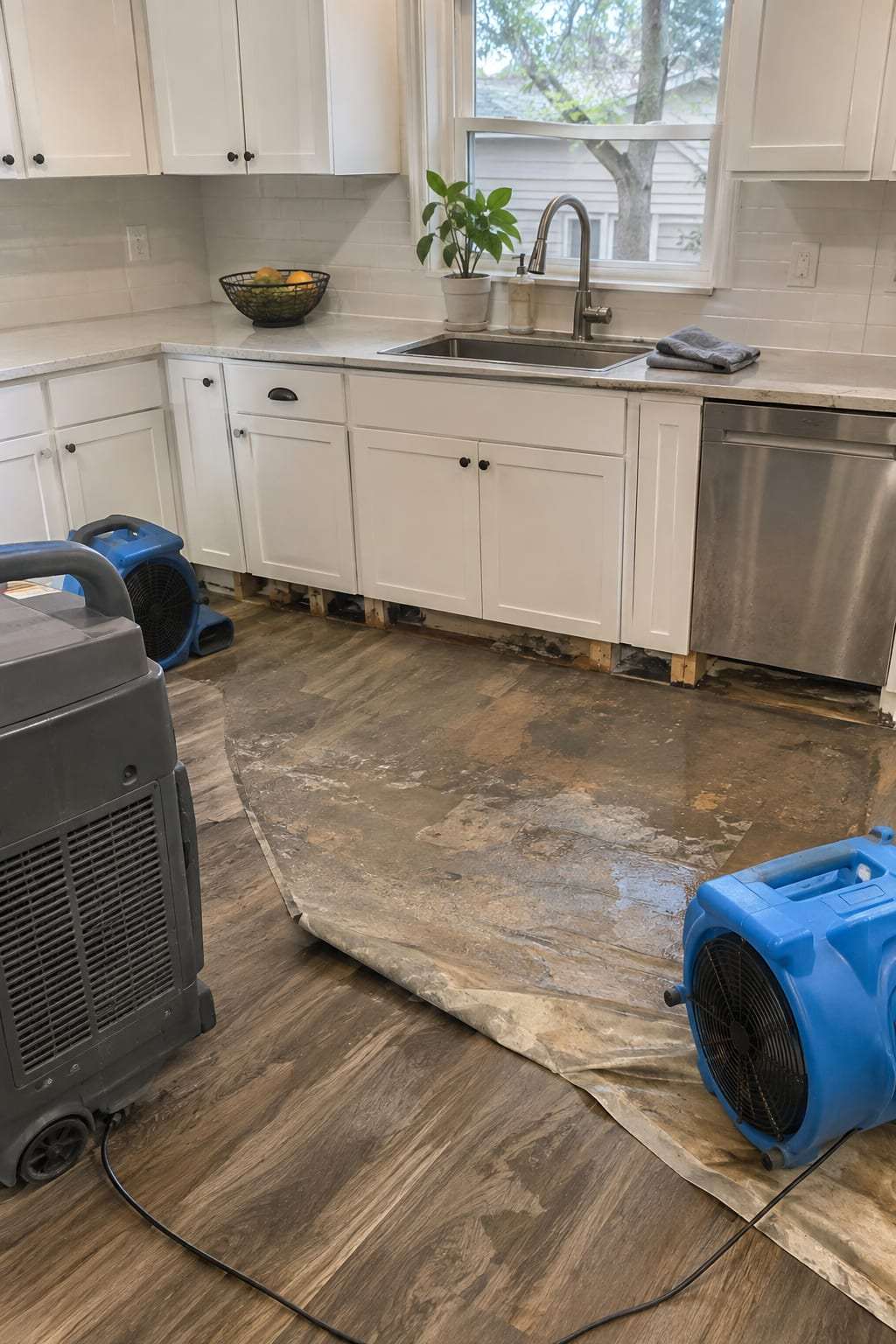
The tools behind the map
| Tool | What it does | Limits to know |
|---|---|---|
| Pin meter | Two pins measure electrical resistance in wood or drywall to estimate moisture content | Leaves small holes; reading scales differ by material |
| Pinless meter | Scans a surface without damaging it to find wetter zones | Reads only a short depth; metal and some finishes skew results |
| Thermal camera | Shows cooler areas where evaporation is happening | Shows temperature, not moisture; a meter has to confirm it |
| Thermo-hygrometer | Measures air temperature and humidity in the room | Describes the drying conditions, not the materials themselves |
What a careful mapping visit looks like
Dry reference readings
The assessor tests the same materials in an unaffected room to learn what normal looks like in your house.
Work outward from the source
They take readings in a grid, moving away from the leak until the numbers match the dry reference.
Check both sides of walls
Water that reached a wall cavity may show up in the next room too, including closets and cabinets.
Mark the boundary
They draw the edge of the wet area on the sketch and write the reading at each test point.
Repeat it every day
They read the same points on each visit, so the progress compares fairly.
Signs the map you got is solid
- It includes a dry reference reading for each material type.
- Test points run past the visible stain into areas that turned out dry.
- Readings are written as numbers, not just wet or dry.
- Someone checked and noted the rooms next door and the level below.
- It's dated and shows who took the readings and with which meter.
Common questions
Can I take my own readings?
Inexpensive meters are easy to buy and can help you notice changes, but they're less precise than professional tools and their scales vary. Use yours to ask better questions, not to overrule a careful assessment.
General information for Lakewood, not a quote or professional advice. In an emergency, call 911.