Two ways to handle a wet wall
Both are legitimate. The readings and the way the wall is built decide which one fits.
Drying the wall closed
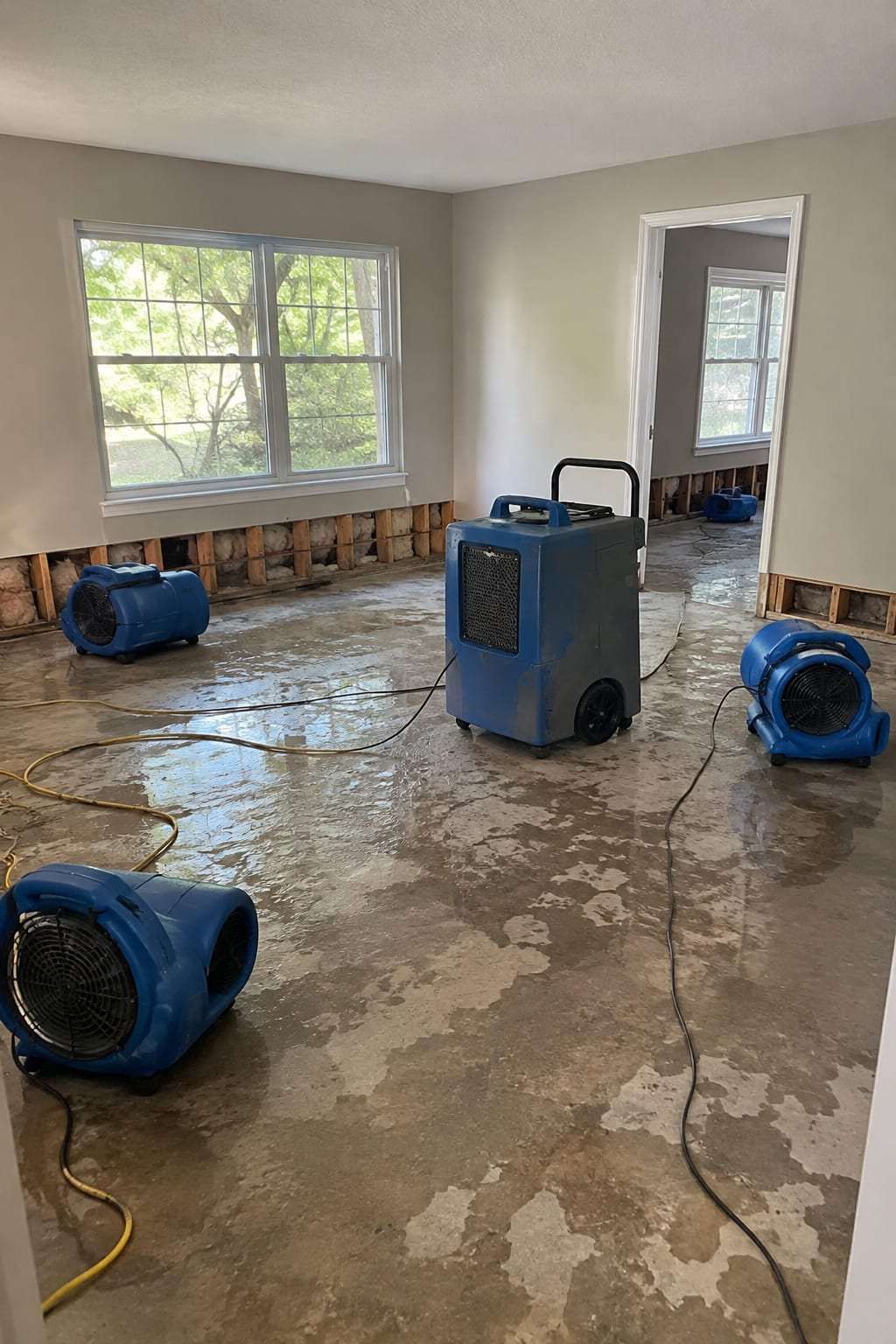
- Air movers blow across the face while dehumidifiers pull moisture out of the room
- Sometimes small holes go in at the base or behind the baseboard to push air into the cavity
- Least disruptive, and you skip patching and repainting large areas
- Works best with clean water, a fast response and an empty or lightly insulated cavity
Opening the wall
- The lower section of drywall comes off, exposing studs and insulation
- Wet insulation comes out and the cavity dries in open air
- Required when the water was contaminated or growth has started
- Often faster overall when insulation or a vapor barrier is trapping moisture inside
What older and remodeled walls add to the decision
Interior partition walls in a Lakewood ranch usually hold nothing but studs and air, which helps them dry. Exterior and basement walls are different. They often hold fiberglass batts, and basement walls finished in later decades may hide rigid foam, a plastic sheet or both behind the drywall. A plastic vapor retarder on the cold side of a basement wall can trap water against the framing, so the face of the drywall dries while the back stays wet.
Finishes matter too. Several coats of oil-based paint, vinyl wallpaper or a glossy kitchen finish slow evaporation through the face of the board. Some houses from the 1940s and early 1950s have plaster on lath instead of drywall in a few rooms. Plaster handles water differently and is harder to patch, so confirm what you have before anyone recommends cutting.
Then look at what the wall touches. A wall with cabinets, a built-in bookcase or a tub against it may need those pulled, or the toe kick opened, to reach the wet section.
Working through it wall by wall
- IfReadings show only the face is damp and the cavity has no insulationThenDrying closed is often reasonable. Ask for daily readings to confirm it's working.
- IfThe cavity holds wet fiberglass battsThenBatts hold water and dry slowly. Opening the wall to pull them is usually the more reliable path.
- IfA plastic sheet or foil-faced insulation sits behind basement drywallThenExpect the back of the board to stay wet. Opening is the common recommendation.
- IfThe wall is plaster on lathThenAsk whether drilling and directed airflow can work before anyone cuts, and get a separate repair estimate for plaster.
- IfReadings stop dropping after several days of dryingThenMoisture is probably trapped. Revisit the plan instead of running the equipment longer.
Before you agree to a cut
- Ask to see the readings on the wall in question and on a dry wall of the same type.
- Ask what's in the cavity and how they know.
- Ask how high the cut will go and why they chose that height.
- Confirm which outlets and circuits sit in the section coming out.
- Ask how they'll document the wall before and after, so the repair estimate matches.
General information for Lakewood, not a quote or professional advice. In an emergency, call 911.