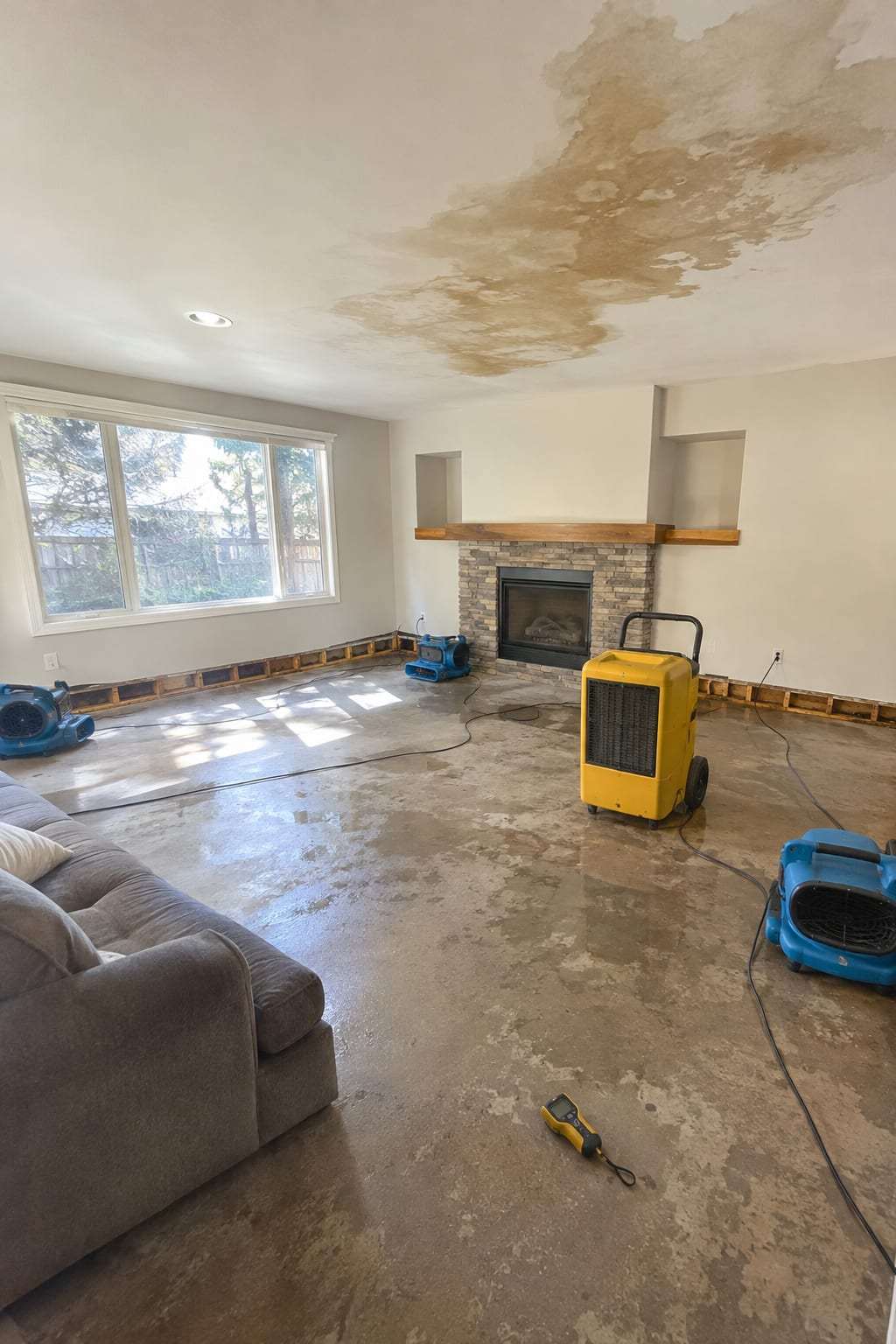
Why remodels find these leaks
A slow drip from a sink trap, a dishwasher supply or a refrigerator ice-maker line can soak a cabinet floor and the subfloor under it for years without showing up anywhere you'd look. The cabinets hide the floor, and the room below may have a dropped ceiling or an unfinished utility area where a small stain never gets noticed.
When the old cabinets come out, the contractor finds dark, soft or crumbling plywood, black staining along the joists and sometimes active growth. At that point the remodel stops being cosmetic. The damaged structure has to be fixed before new cabinets and flooring go in, or the new kitchen sits on a weak, possibly moldy base.
Do these before work goes on
- Ask the remodeler to stop work in the damaged area until someone assesses it.
- Photograph everything from several angles, with something for scale, before anything else comes out.
- Keep the failed fitting, trap or supply line if anyone finds it.
- Note whether the area is still wet, or dry and stained. That difference matters to everyone involved.
- Check the ceiling or framing below the kitchen for stains or soft spots.
- If the house predates about 1980, ask whether any flooring or adhesive coming out should be tested for asbestos first.
Sorting out the next steps
- IfThe area is still wetThenThe leak may still be running. Have a plumber find and fix the source, then get moisture readings before anything gets closed up.
- IfThe wood is dry, stained and solidThenThe leak may be old and stopped. Ask whether the stained material can be cleaned and sealed or should be replaced.
- IfThe subfloor or joists are soft, delaminated or crumblingThenStructural repair comes first. Your remodeler may handle it or may suggest a separate contractor.
- IfGrowth covers a large areaThenAsk about containment and proper removal instead of tearing it out with the rest of the demolition.
Questions for the insurer and the contractor
Many policies treat long-term leaks differently from sudden ones, so ask before you assume anything is covered or isn't.
- Does my policy cover any part of damage that built up over time, or only a sudden event?
- Do you want an adjuster to see the area before it's repaired?
- Will the remodel contract change to include structural repair, and how will that be priced and documented?
- Who confirms the area is dry before new flooring goes down?
- Should we update the rest of the plumbing in this kitchen while the walls and floor are open?
General information for Lakewood, not a quote or professional advice. In an emergency, call 911.